
Uterine Fibroid Embolization: A Non-Surgical Solution That Preserves the Uterus and Restores Quality of Life
Overview
What Are Uterine Fibroids?
Uterine fibroids (leiomyomas) are benign tumors that develop from the smooth muscle cells of the uterus. Despite being noncancerous, they can significantly impact menstrual health, fertility, and overall quality of life.
By age 50, up to 70% of White women and 80% of Black women develop fibroids. Although many remain asymptomatic, others experience life-disrupting symptoms requiring medical attention.
Risk Factors
- Age over 40
- Obesity or overweight
- Hypertension
- African descent
- Family history
- No prior pregnancies
Signs and Symptoms
While some fibroids remain “passenger fibroids,” others cause substantial symptoms:
- Heavy menstrual bleeding (most common)
- Pelvic pressure or fullness
- Severe menstrual cramps
- Abdominal enlargement
- Bleeding between periods
- Pain during or after intercourse
- Lower back pain
- Constipation
- Frequent urination or nocturia
Diagnosis typically involves:
- Pelvic examination
- Ultrasound imaging
- MRI for detailed mapping
Interventional Radiology (IR) Treatment Options
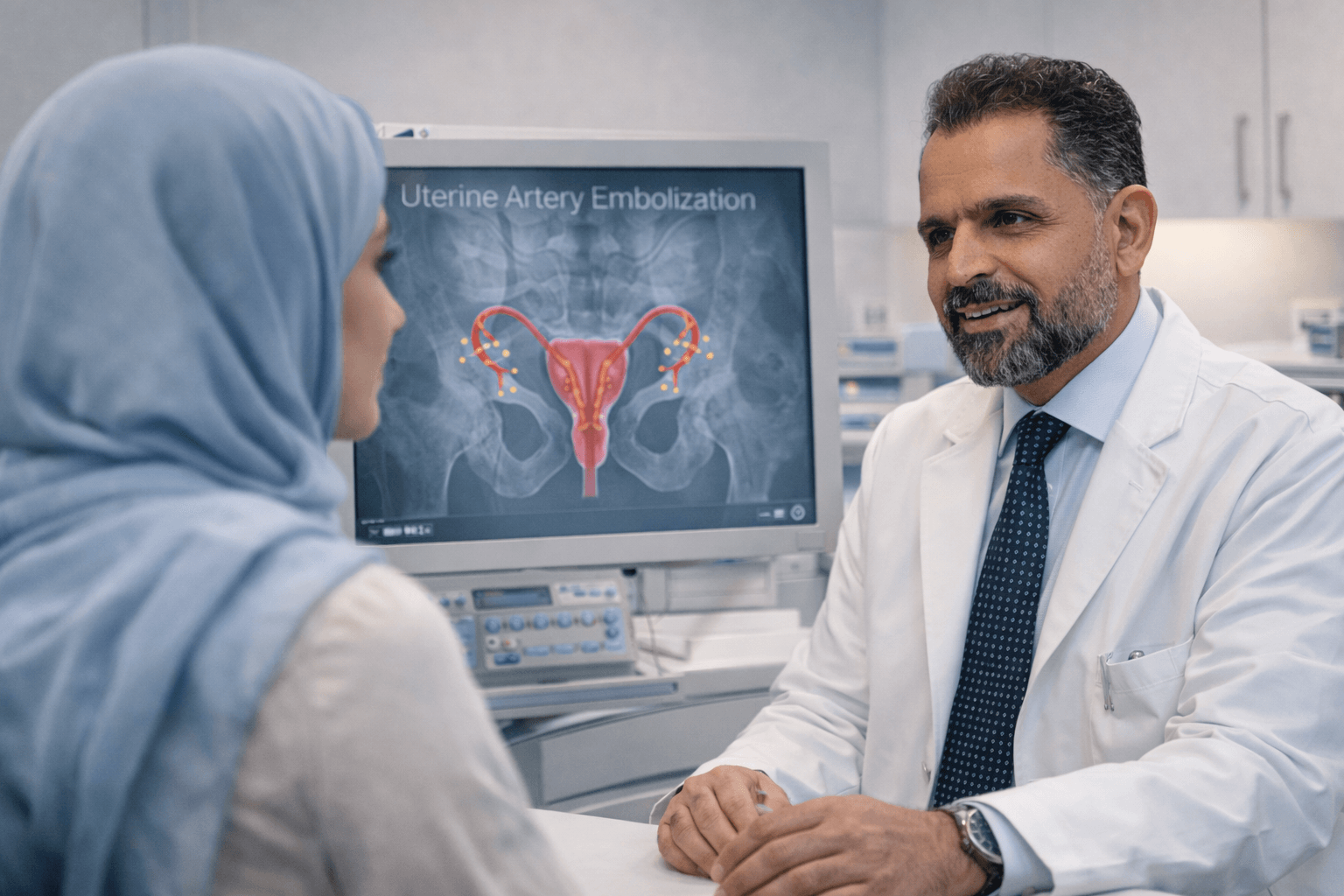
How Uterine Fibroid Embolization (UFE) Works
Fibroids depend on a continuous blood supply to survive. Blocking that blood flow causes them to shrink and lose activity.
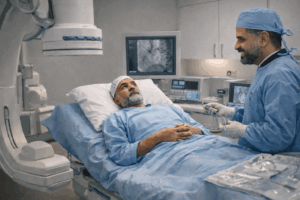
Uterine Fibroid Embolization (UFE), also known as Uterine Artery Embolization (UAE), is a minimally invasive procedure performed by an interventional radiologist.
Procedure Steps
- Conscious sedation is administered.
- A small incision (2–3 mm) is made in the wrist or groin.
- A microcatheter is guided into the uterine artery.
- Tiny embolic particles are injected.
- Blood supply to the fibroid is blocked.
- The fibroid shrinks progressively over weeks to months.
- Both uterine arteries are treated for optimal outcomes.
No stitches are required.
Approximately 90% of women experience significant or complete symptom relief.
Who Is a Candidate for UFE?
Women with asymptomatic fibroids require no treatment.
However, if fibroids cause:
- Heavy bleeding
- Pelvic pain
- Urinary symptoms
- Reduced quality of life
UFE offers a uterus-preserving alternative to surgery.
For women in their 40s and beyond, UFE is often the only treatment needed before menopause naturally halts fibroid growth.
Follow-Up and Recovery
What Is Recovery Like?
- UFE recovery: 5–7 days
- Hysterectomy recovery: up to 8 weeks
- Myomectomy recovery: several weeks
Most patients go home the same day.
How Does UFE Compare to Surgery?
| Feature | UFE | Hysterectomy | Myomectomy |
|---|---|---|---|
| Uterus preserved | Yes | No | Yes |
| Hospital stay | Same day | Several days | Several days |
| Recovery time | 5–7 days | Up to 8 weeks | Weeks |
| Major incision | No | Yes | Yes |
UFE avoids many surgical risks such as:
- Early menopause
- Sexual dysfunction
- Extended recovery
- Major abdominal surgery
Fertility Considerations
Studies indicate that approximately 60% of women desiring pregnancy after UFE achieved childbirth.
Unlike myomectomy, vaginal delivery may still be possible in selected cases.
Why Choose The VIR Clinic?
At TheVIR Clinic, uterine fibroid embolization is performed under the supervision of an elite team of interventional radiology and vascular consultants, recognized among the best specialists in Saudi Arabia.
We combine:
- Advanced angiography technology
- Precision image-guided techniques
- International treatment protocols
- Patient-centered care
- Multidisciplinary gynecological collaboration
Our goal is not only symptom relief — but long-term reproductive and vascular health with the highest safety standards.
Is UFE Right for You?
If heavy bleeding or pelvic pain is affecting your quality of life, a consultation with an interventional radiology specialist can determine the most appropriate treatment plan tailored to your condition.